
Index
- Introduction
- Account Creation
- Activation
- User Panel
- Metabase Setup
- How to uninstall the app
- Beta API's
- Opt-In Tables
- Data Sync
- Data Security
Introduction
The Datawarehouse.io Metabase Connector brings all your data directly into Metabase, making it easy to explore, visualize, and share insights across your organization.
By syncing multiple data sources to Azure SQL, you can use Metabase’s user-friendly interface to build dashboards, run queries, and create interactive visualizations—no coding required. Empower teams to ask questions, track metrics, and collaborate on data-driven decisions using the full range of Metabase’s tools, without the manual hassle of exports or siloed spreadsheets.
Account Creation
- Create an account at app.datawarehouse.io
- Select the Metabase Connector on the dashboard or in the left-hand menu.
- Click the Start Free Trial button.
- You will be re-directed to a page labeled Select Initial Data Source. Here, you will select which data source to link to the Connector app.
- Select the refresh rate that you want your data to sync into Metabase.
- You are then re-directed to the checkout screen. Please fill out all required information in order to activate your service.
- Success! You are all signed up and can now visit the Metabase Connector section of the app to view your connector details.
- Continue to the Metabase Connector Setup Guide for how to plug the app into Azure Data Studio.
Activation
Once you have successfully signed up, we will activate your app. Upon activation an email with your connector details will be sent to you. You can also retrieve them from the User Panel.
User Panel
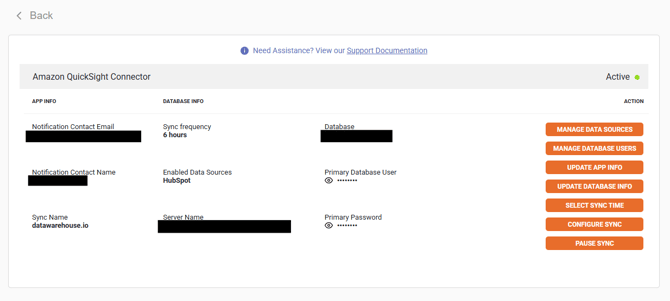
You can visit the User Panel to perform the following self service administrative actions for your connector database.
Below are the primary functions of the selections found in your user panel:
- Manage Data Sources
- You can add and manage additional data sources such as LinkedIn Ads and Google Ads to be included in the Connector dataset (see Manage Data Sources subsection below form more details).
- Manage Database Users
- You can add and manage additional database users by clicking on and using this feature here (see Manage Database Users subsection below for more details).
- Configure Sync
- You can set up the sync to only sync over the data you need using this feature by removing specific tables and fields/columns from the sync (see Sync Configuration subsection below for more details).
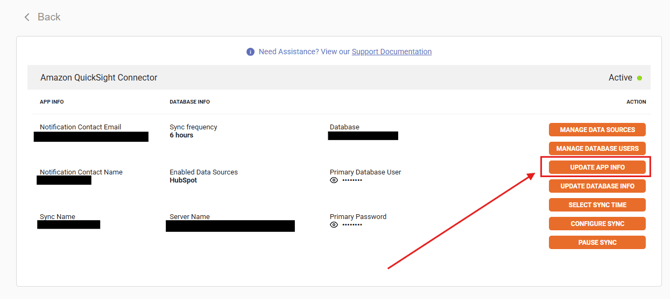
- Update App Info
- You can assign/reassign the primary user of the database by clicking on this button and making the necessary adjustments by inputting the information in the pop-up window as shown in the example below.
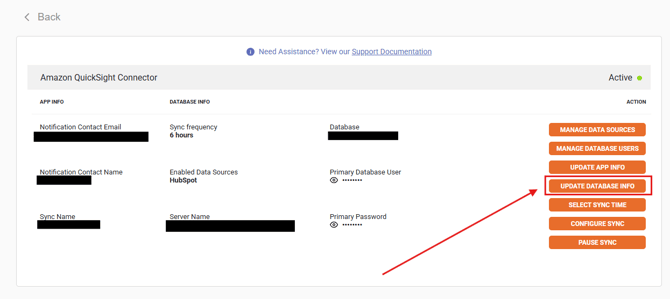
- Update Database Info
- You can change the name of the database and the primary username of the database here.
-
Pause Sync
- You can pause and un-pause the sync at any time using this feature.
- Please note: This does not pause the billing for your subscription. It only pauses the sync between your data sources and your Connector database.
- You can pause and un-pause the sync at any time using this feature.
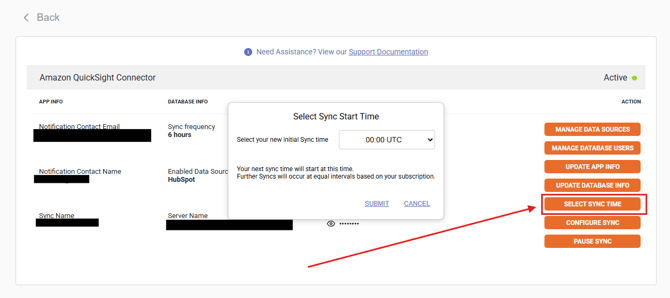
- Select Sync Time
- Here, you can adjust your sync times as needed by opening the interface as shown in the example below.
- Please note: This feature is only available to users on the 6-hour refresh rate plan or higher. To learn how to upgrade your subscription, please review the following documentation linked here.
How to access the user panel
To access the user panel, please review the following instructions:
-
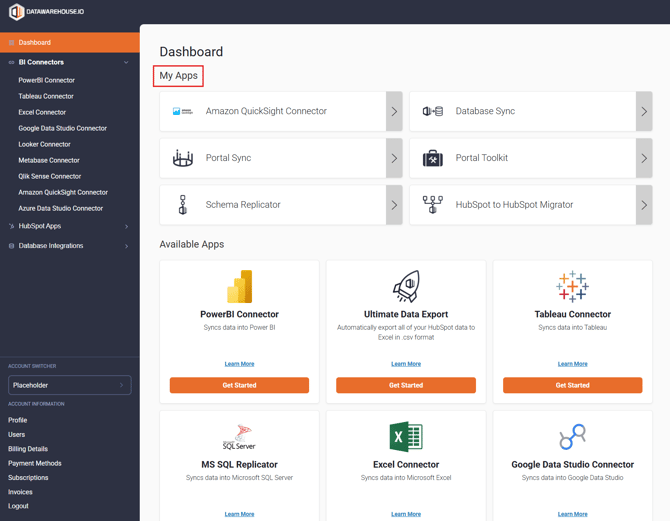
Log into your Datawarehouse.io account at https://app.datawarehouse.io/.
- Select your Connector app from the My Apps section of the main dashboard page.
-
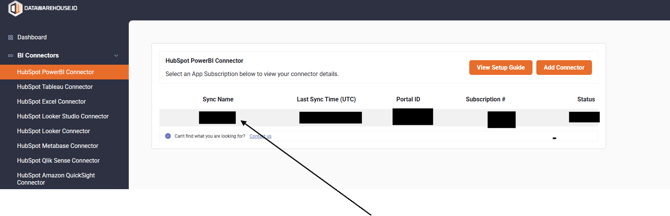
On the app details page, click on the sync name entry under the Sync Name column to open the management window for your sync. This will take you to your user panel.
Sync Configuration
The Sync Configuration feature allows users to select and deselect which pieces of data they wish to have synced from their data sources.
- Users can use this feature to suppress and remove any tables or specific fields/columns/properties that are currently synced into their database that they do not need or are not currently using.
- Suppressing properties and tables will not remove those pieces of data from your data source. Suppressing properties or tables excludes them from future syncs and removes the corresponding data from the database that the Datawarehouse.io app syncs to.
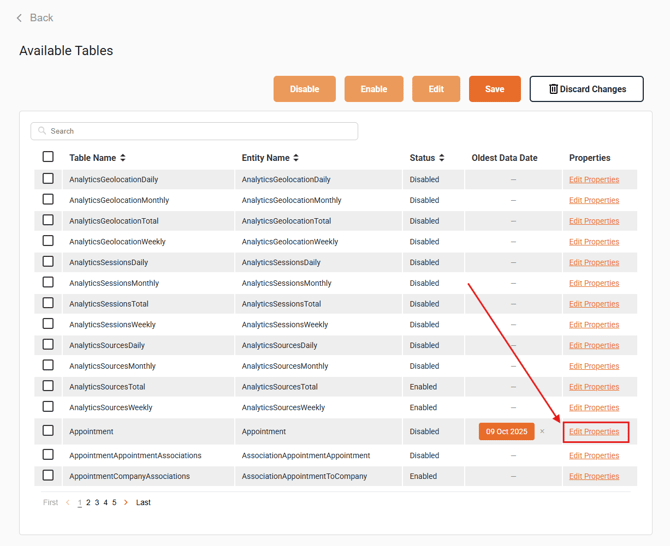
To learn how to locate and use this feature, please review the following help documentation linked below.
Manage Database Users
Additional users can be added and managed to your connector database with the Datawarehouse.io app, allowing additional users to access the database without needing to share the primary user credentials.
To learn how to add and manage additional users for your database, please review the linked documentation below:
Manage Data Sources
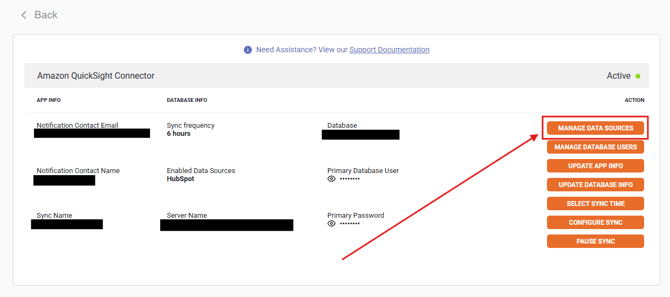
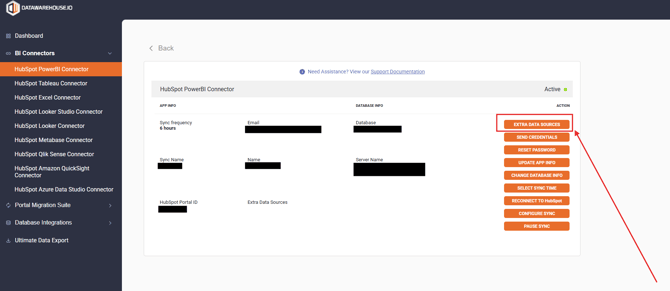
To manage your data sources, click the Data Sources button in the user panel interface.
For more details about what data sources are available, as well as how to add, remove, and alter existing data sources for your connector please visit the support guide linked below.
Metabase Setup
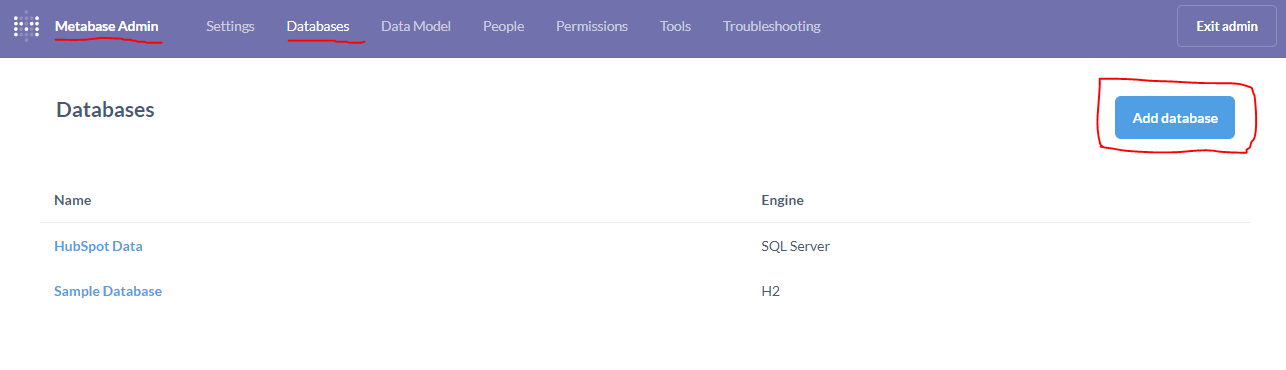
1. Start Metabase and go to the Metabase Admin section. Select Databases and then select Add database.
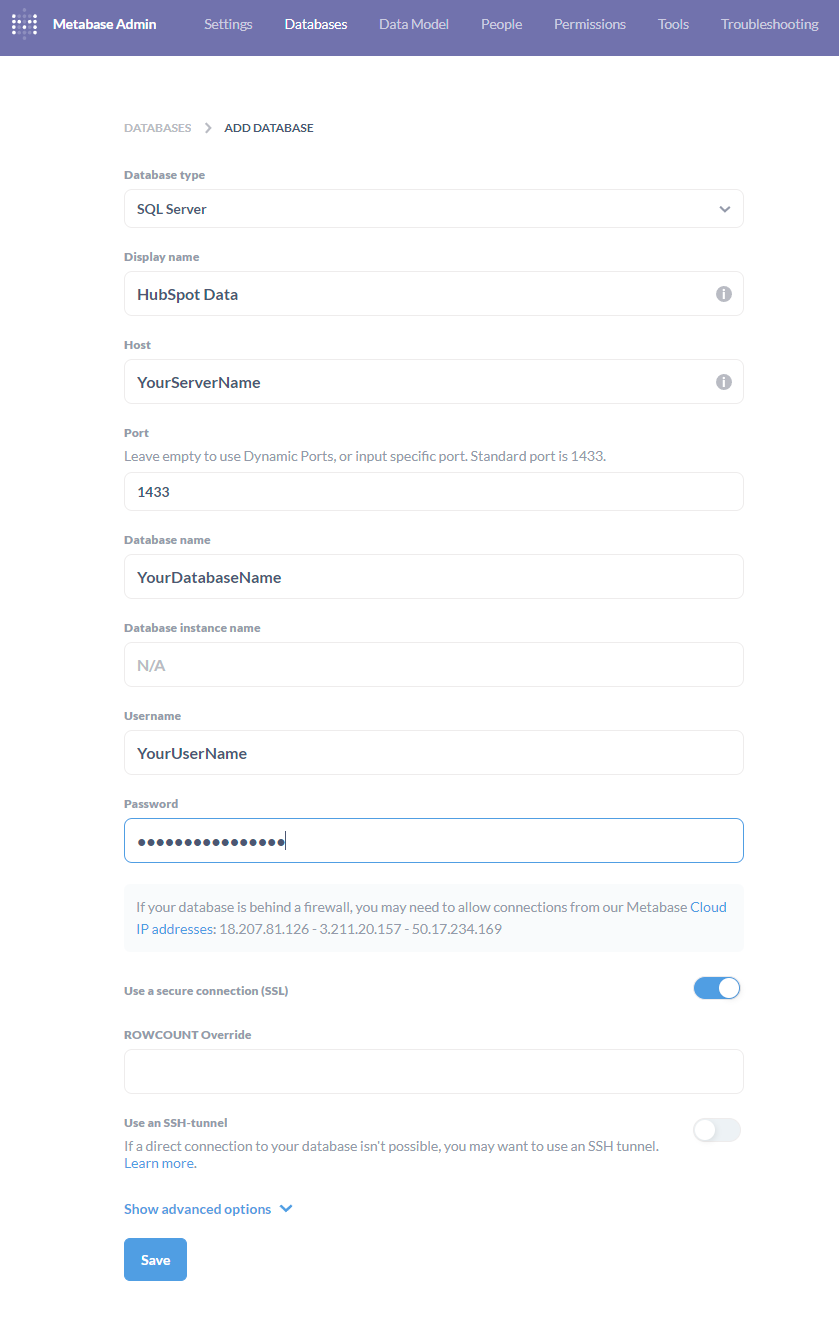
2. Select "SQL Server" as the database type. Then Define your display name of choice. After than enter your Connector details that were sent to you via email. Be sure to also enter the port listed below.
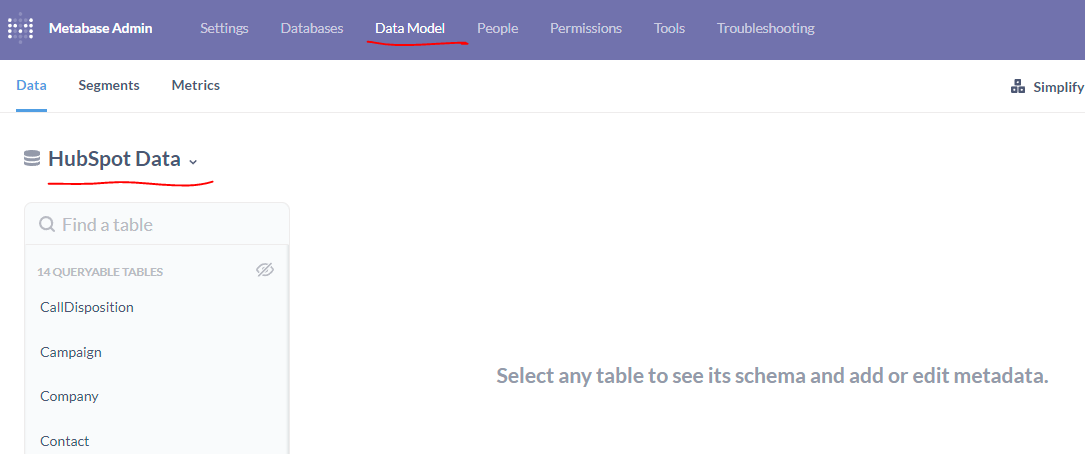
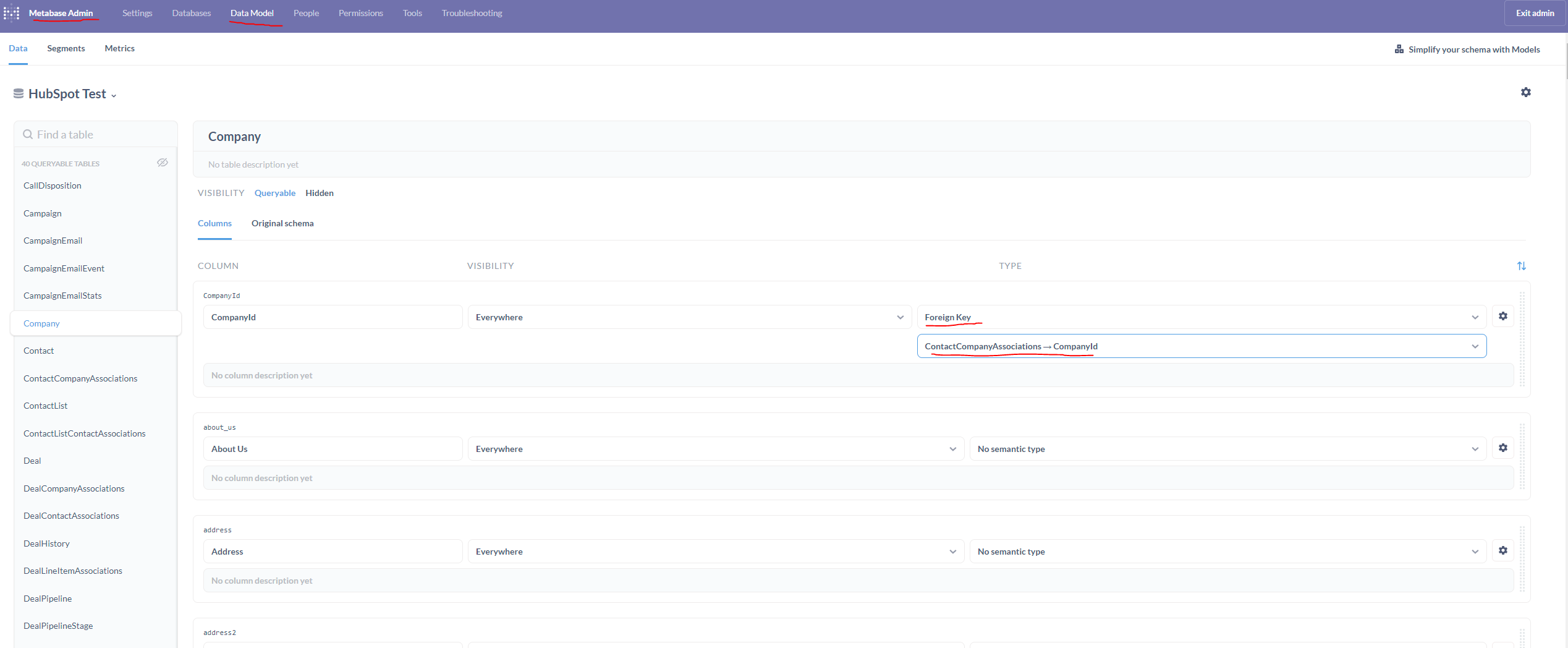
3. After you connect your database to Metabase you can begin setting up the relationships between the data tables as needed. To do so go to the Data Model section in the Metabase Admin panel and select the database you added.
4. Once you are inside the data model section of Metabase you are able to relate the various data tables in the connector database. Your dataset stores all of its data in separate tables and it replicates that structure. In order to see certain labels, you have to join tables using the foreign keys listed in the Entity Relationship Diagram (ERD) that can be found linked below:
An example of how to join tables can be shown below.
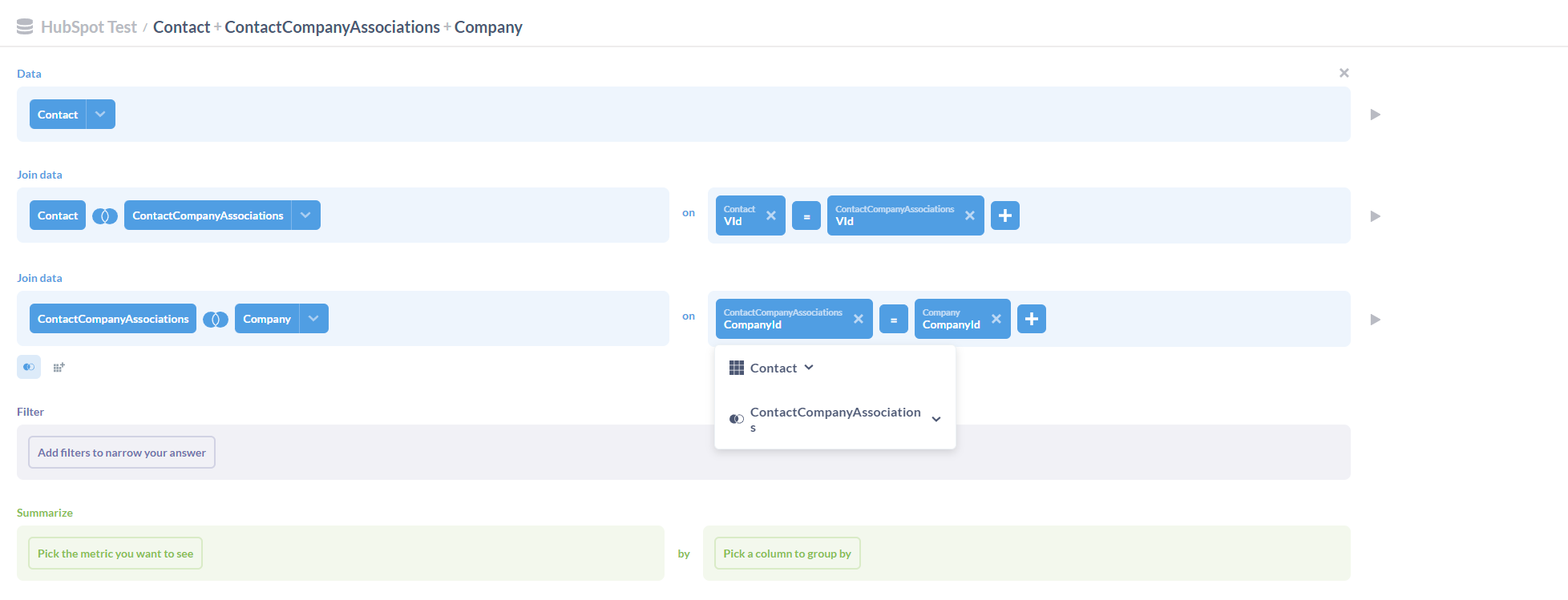
5. You can also join data as part of a "Question". A "Question" in Metabase is a pre-set query that you can access on the fly for a quick visualization. The joining process is similar but visually looks different and can be seen below.
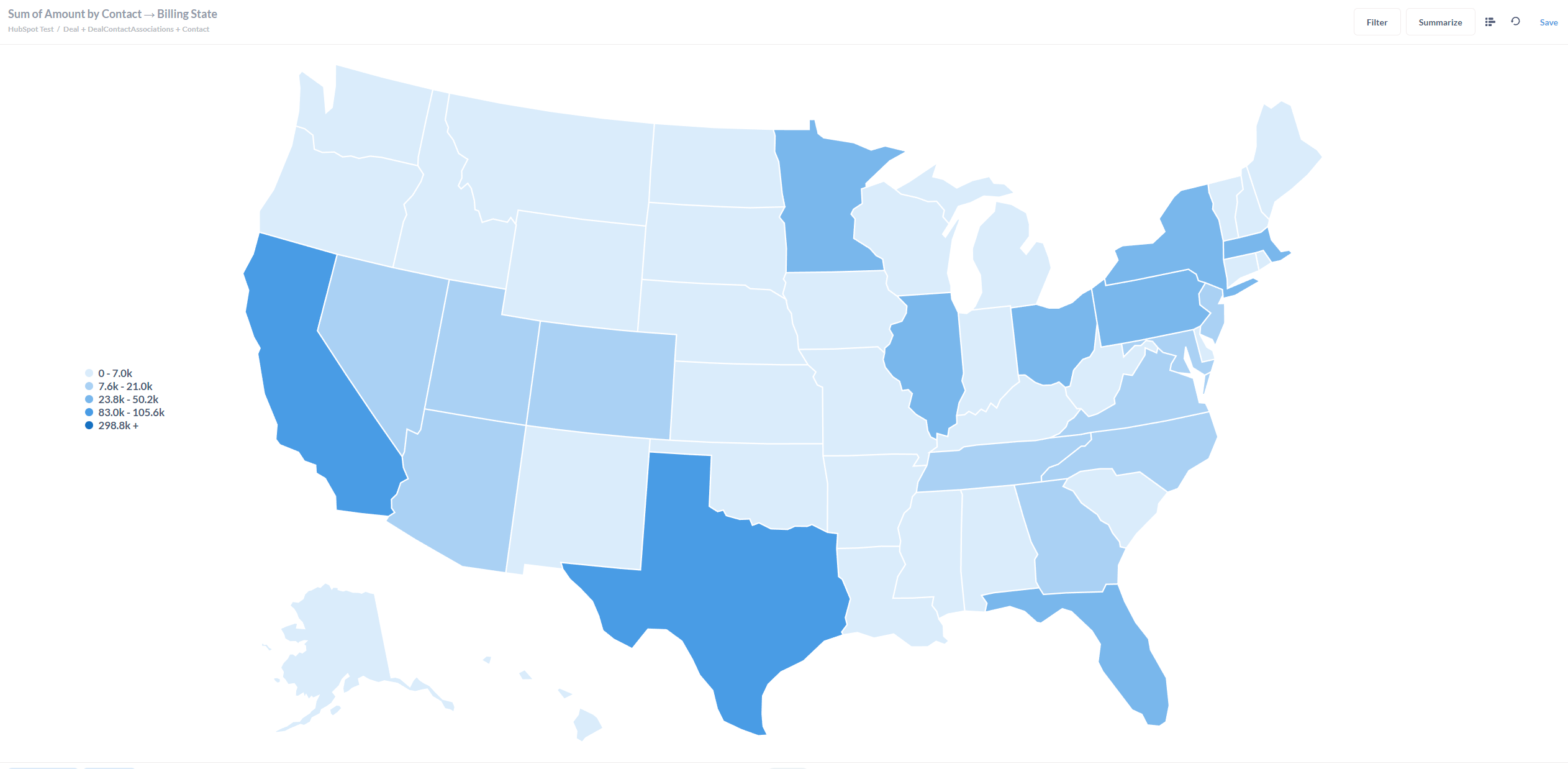
6. The join listed above resulted in the ability to create this visualization that shows where all the contacts are located by state, and the deal amounts closed in each state.
How to uninstall the app
For instructions on how to uninstall the Datawarehouse.io app in your data source, please review the following documentation:
*Please note this does not cancel your subscription. To do that, please visit:
Beta API's
This app utilizes the following beta API's:
ChatflowThread and ChatflowMessage data tables contain Chatflows data and is powered by the beta API listed below.
More information about beta APIs can be found in this supporting documentation.
Opt-In Tables
The following tables are opt-in as they are advanced and are large data sets and can take up a significant amount of storage and API Calls. Submit a support request with your database name or email help@datawarehouse.io to ask for these to be enabled. There is no additional cost to enable these tables.
- ContactWebEvents
- CustomEvent
- ContactSubscriptionType
- ChatflowThread
- ChatflowMessage
- TicketPropertiesHistory
- DealPropertiesHistory
- ContactPropetiesHistory
- CompanyPropertiesHistory
- EngagementsHistory
Data Sync
Data syncing will be done at intervals determined by your plan.
Please allow at least 24-48 hours from activation for the initial database to be built. Once it is built it will refresh at the rate determined by your plan.
Data Security
- Only you will have "read only" access to your database. You can make changes in your BI tool, but they will not be reflected in HubSpot.
- User authentication for each data source is done using OAuth 2.0 protocol as per the best practice in industry.
- This application is GDPR Compliant
- If you have trouble accessing the database due to your internal firewall restrictions please have your IT department open outbound TCP Port 1433
- If there is information missing from a property it could be because that fields is improperly configured in its respective data source.